
When Computers Become Programmers: The Story of Devin and the Future of Coding
Technology is evolving at an incredible pace, and artificial intelligence (AI) is leading this transformation. Over the past few years, AI has changed how we search for information, create content, design graphics, and even write software. One of the most exciting developments in this field is Devin, an AI-powered software engineer that has captured the attention of developers worldwide.
For decades, programming was considered a skill that only humans could perform effectively. Writing code required logic, creativity, problem-solving abilities, and experience. However, modern AI systems are beginning to challenge this assumption. Devin represents a significant milestone in the journey toward autonomous software development.
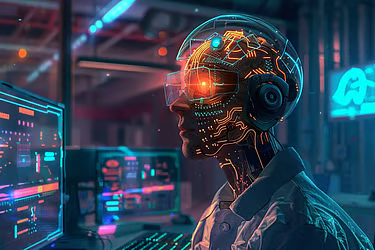
In this article, we'll explore what Devin is, how it works, its advantages and limitations, and what the future of coding might look like in an AI-driven world.
What Is Devin AI?
Devin is an advanced AI software engineering assistant designed to perform complex coding tasks with minimal human intervention. Unlike traditional coding assistants that merely suggest code snippets, Devin can understand project requirements, write code, debug issues, execute tests, and improve software systems.
The goal of Devin is not simply to generate code but to function more like a real software engineer. It can analyze a problem, create a development plan, implement solutions, and refine its work based on results.
This capability marks a major leap from earlier AI coding tools, which typically relied on human developers to guide every step of the process.
Key Features of Devin
- Autonomous coding capabilities
- Bug detection and debugging
- Software testing and validation
- Project planning and execution
- Learning from previous interactions
- Integration with development environments
These features make Devin one of the most advanced AI coding systems introduced to date.
How Devin Works
At its core, Devin uses large language models (LLMs), machine learning algorithms, and software engineering workflows to complete tasks.
The process generally follows these steps:
1. Understanding Requirements
A user provides instructions, such as:
"Build a simple e-commerce website with user authentication and payment integration."
Devin analyzes the request and breaks it into manageable tasks.
2. Planning the Project
Instead of immediately generating code, Devin develops a strategy.
It identifies:
- Required technologies
- Project structure
- Database requirements
- User interface components
- Security considerations
3. Writing Code
Once the plan is ready, Devin generates the necessary code files and structures the project appropriately.
4. Testing and Debugging
Unlike basic AI coding assistants, Devin can run tests, identify errors, and attempt to fix issues automatically.
5. Iterative Improvement
If problems remain, Devin continues refining the solution until it meets the project's requirements.
This workflow resembles how professional software engineers operate in real-world environments.
Why Devin Is Important
The introduction of Devin is significant because it demonstrates how AI is moving beyond simple automation.
Previously, AI tools mainly helped developers by:
- Autocompleting code
- Suggesting functions
- Generating documentation
Devin takes a different approach by handling larger portions of the software development lifecycle.
This shift could fundamentally change how software is created in the future.
Benefits of AI-Powered Programming
Faster Development
One of the biggest advantages of AI coding assistants is speed.
Tasks that previously required hours of manual work can often be completed in minutes.
Developers can:
- Build prototypes faster
- Automate repetitive tasks
- Focus on creative problem-solving
Reduced Development Costs
Companies spend significant resources on software development.
AI-powered tools may reduce costs by:
- Increasing productivity
- Reducing debugging time
- Accelerating project delivery
Improved Accessibility
Many people want to learn programming but find it difficult.
AI tools can lower barriers to entry by helping beginners:
- Understand coding concepts
- Generate examples
- Learn through experimentation
Enhanced Productivity
Professional developers can use AI assistants to:
- Write boilerplate code
- Refactor legacy systems
- Generate documentation
- Automate testing
As a result, teams can accomplish more with fewer resources.
Can Devin Replace Human Programmers?
This is perhaps the most common question surrounding AI coding tools.
The short answer is:
Not completely—at least not yet.
While Devin is impressive, software engineering involves much more than writing code.
Human developers still provide:
Creative Thinking
Software solutions often require innovative approaches.
Humans excel at understanding complex business needs and creating unique solutions.
Strategic Decision-Making
Choosing the right architecture, technologies, and long-term strategies requires experience and judgment.
Communication Skills
Developers work with:
- Clients
- Designers
- Product managers
- Business stakeholders
AI currently lacks the human communication skills necessary for these interactions.
Ethical Responsibility
Humans remain responsible for ensuring software:
- Protects privacy
- Maintains security
- Complies with regulations
- Avoids harmful outcomes
Therefore, AI is more likely to become a powerful assistant rather than a complete replacement for programmers.
Challenges and Limitations of Devin
Despite its capabilities, Devin has several limitations.
1. Accuracy Issues
AI-generated code is not always correct.
Errors can still occur, requiring human review.
2. Security Risks
Poorly generated code may introduce vulnerabilities.
Security audits remain essential.
3. Lack of Context
AI may misunderstand business goals or user expectations.
Humans provide valuable contextual understanding.
4. Dependence on Training Data
AI systems learn from existing information.
They may struggle with entirely new scenarios.
5. Ethical Concerns
Questions remain about:
- Copyright
- Data ownership
- Accountability
- Job displacement
These issues will continue to shape discussions around AI development.
The Future of Coding with AI
The future of programming is unlikely to involve humans versus AI.
Instead, it will be about humans working alongside AI.
Developers who embrace AI tools may gain significant advantages.
Future programming environments could include:
AI-Powered Development Teams
Organizations may use multiple AI agents specializing in:
- Front-end development
- Back-end development
- Security testing
- Documentation
Natural Language Programming
Instead of writing code manually, developers may increasingly describe requirements in plain English.
AI systems will convert those instructions into working applications.
Automated Maintenance
AI could monitor software continuously and:
- Detect bugs
- Apply fixes
- Optimize performance
Personalized Learning
Future coding education may use AI tutors that adapt lessons to each student's skill level.
Skills Developers Should Learn in the AI Era
As AI transforms software development, programmers should focus on skills that complement automation.
Problem-Solving
Understanding how to solve real-world challenges remains critical.
System Design
Architecture and system planning will become increasingly valuable.
AI Collaboration
Developers should learn how to work effectively with AI tools.
Cybersecurity
Security expertise will remain in high demand.
Communication
The ability to understand business needs and collaborate with teams will continue to differentiate human developers.
Will AI Create More Opportunities?
History suggests that technological innovation often creates new opportunities.
When computers became common, many feared job losses.
Instead, entirely new industries emerged.
Similarly, AI may create demand for:
- AI engineers
- Prompt engineers
- AI auditors
- AI ethics specialists
- Human-AI collaboration experts
Those who adapt to changing technology will likely benefit the most.
What Businesses Need to Know
Companies should view AI as a productivity tool rather than a replacement strategy.
Successful organizations will likely:
- Combine human expertise with AI capabilities
- Invest in employee training
- Develop responsible AI policies
- Maintain strong security standards
The businesses that adopt AI intelligently may gain a competitive advantage in the years ahead.
Last words
Devin represents a fascinating glimpse into the future of software development. By demonstrating the ability to understand tasks, write code, debug issues, and improve solutions, it showcases how far AI technology has advanced.
However, the future of coding is not about eliminating programmers. Instead, it is about empowering them with intelligent tools that increase productivity and unlock new possibilities.
As AI continues to evolve, developers who embrace learning, adaptability, and collaboration with AI systems will be best positioned for success. The rise of Devin is not the end of programming—it is the beginning of a new era where humans and AI work together to build the software of tomorrow.

Priyo Blog
I try to share everything I know with you. Thank you for viewing the post.


